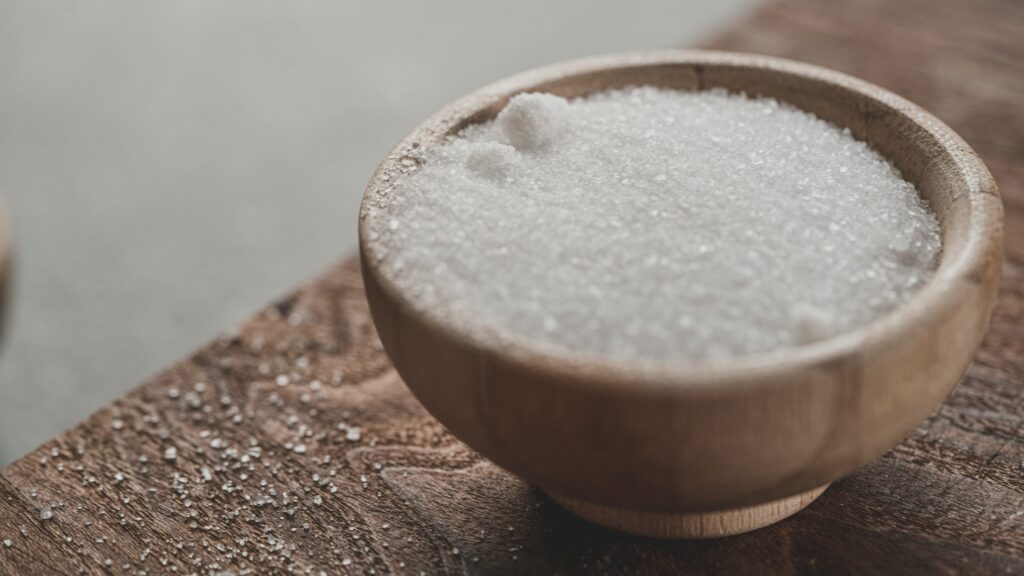




Maltitol is a sugar alcohol — a type of carbohydrate called a polyol — used to sweeten “sugar-free” and “no sugar added” foods like chocolate, candy, and protein bars. It’s roughly 75 to 90 percent as sweet as table sugar with about half the calories, which is why manufacturers reach for it. But unlike calorie-free sweeteners such as sucralose, maltitol is not consequence-free. It still raises blood sugar — it has a real glycemic index — and like other sugar alcohols it can cause gas and bloating, especially in larger amounts. This guide covers what maltitol does in the body, its side effects, how it stacks up against other sugar alcohols, and who should be cautious.
What is maltitol?
Maltitol is made by hydrogenating maltose, a sugar derived from starch (usually corn or wheat). The result is a sweetener that behaves much like sugar in bulk and texture and is heat-stable enough for baking, which makes it popular in sugar-free chocolate and baked goods where sweeteners like sucralose don’t perform well. One difference from sugar: maltitol doesn’t brown or caramelize, because as a sugar alcohol it lacks the reactive chemistry behind those effects.
Chemically it sits in the polyol family alongside erythritol, xylitol, sorbitol, and isomalt. All of these are partially digested, which is the root of both their appeal (fewer calories, less glycemic impact than sugar) and their downsides (digestive symptoms). Maltitol provides roughly 2.1 to 2.4 calories per gram (depending on the regulatory standard) versus 4 for sugar, and because it’s only partially absorbed, the body treats it differently from ordinary sugar.
Does maltitol raise blood sugar?
Yes — and this is where maltitol differs sharply from non-nutritive sweeteners. While sucralose produces little to no glucose response, maltitol carries a meaningful glycemic index of roughly 35 — lower than sugar’s ~60–65, but far from zero (Livesey G, Nutr Res Rev 2003, PMID 19087388). Among the sugar alcohols, maltitol is one of the higher-glycemic options.
That matters most for people managing blood sugar. A “sugar-free” chocolate bar sweetened with maltitol can still nudge glucose upward, and eating several servings can add up to a noticeable rise. A review of sugar alcohols as potential antidiabetic aids found that while polyols generally blunt the glycemic response compared with sugar, maltitol’s effect is modest, not absent (Msomi NZ et al., J Food Drug Anal 2021, PMID 35696228).
This is exactly the kind of thing a continuous glucose monitor (CGM) makes visible. We should be upfront about one limitation. Ultrahuman’s database holds very few logged instances of maltitol consumed on its own, so the picture here draws on published research rather than original Ultrahuman data. But the practical takeaway is sound — if you want to know how a specific maltitol-sweetened product affects you, testing it against a baseline with a CGM tells you more than the “sugar-free” label does.
Why it upsets your stomach
The most common maltitol side effects are digestive — gas, bloating, and abdominal cramping. The mechanism is straightforward. Because maltitol is only partially absorbed in the small intestine, a share passes into the colon, where gut bacteria ferment it (producing gas) and where its osmotic pull can draw water into the bowel, which at high enough doses can loosen stools.
But maltitol’s laxative reputation is milder than the sugar-free-candy stories suggest. In a controlled trial, 40 grams of maltitol in chocolate caused only mild gas and rumbling — and, notably, no significant laxative effect — and was better tolerated than the same dose of isomalt or lactitol (Koutsou GA et al., Eur J Clin Nutr 1996, PMID 8617186). The strong reactions people associate with sugar-free sweets are more often driven by very high intakes, individual sensitivity, or other polyols such as sorbitol and lactitol in the same product. That said, polyols as a group can cause laxation once the dose is high enough, with thresholds that vary by individual and by polyol (Livesey G, Nutr Res Rev 2003, PMID 19087388). In the European Union, foods high in added polyols must carry a label warning that excessive consumption may have a laxative effect.
How much is too much?
There’s no single threshold, because tolerance is highly individual and builds with regular exposure. Gastrointestinal symptoms from sugar alcohols rise with dose, and in controlled testing even 40 grams of maltitol produced only mild gas and bloating in healthy adults (Koutsou GA et al., 1996). As a rough guide, many people tolerate moderate amounts fine, but a sensitive person may react to far less — and a single sugar-free chocolate bar can contain 20 grams or more, so eating several, or combining maltitol with other polyols, is usually where discomfort starts.
Practical signs you’ve had too much include gurgling, bloating within a few hours, and loose stools. The simplest fix is to cut back the portion; tolerance often improves if intake is increased slowly rather than all at once.
How it compares to other sugar alcohols
Not all sugar alcohols behave the same way. They differ in sweetness, glycemic impact, and, crucially, how well the gut tolerates them. Erythritol stands out because it’s almost entirely absorbed and excreted unchanged, so it has essentially no glycemic impact and causes far less digestive upset than maltitol (Mazi TA et al., Nutrients 2023, PMID 36615861).
| Sugar alcohol | Sweetness vs sugar | Glycemic index (approx.) | Digestive tolerance |
|---|---|---|---|
| Erythritol | ~70% | ~0 | Best tolerated |
| Xylitol | ~100% | ~13 | Moderate (toxic to dogs) |
| Isomalt | ~50% | ~2–9 | Moderate |
| Sorbitol | ~60% | ~9 | Poor (strong laxative) |
| Maltitol | ~75–90% | ~35 | Moderate (gas/bloating at higher doses) |
Approximate values compiled from polyol research (Livesey 2003; Msomi 2021); individual response varies.
On balance, maltitol’s bigger drawback is glycemic, not digestive — it’s one of the higher-glycemic sugar alcohols, while its gut tolerance is moderate. If a product’s main goal is to avoid both blood-sugar impact and digestive upset, erythritol is usually the better-tolerated choice. (One aside worth knowing — xylitol is highly toxic to dogs even in small amounts, so keep xylitol-sweetened products away from pets.)
Who should be careful with maltitol?
Maltitol is recognized as safe by regulators including the FDA and EFSA, and for most people the main issue is comfort, not danger. A few groups have more reason to watch their intake:
- People managing diabetes or blood sugar. Maltitol’s glycemic index isn’t trivial, so “sugar-free” doesn’t mean “won’t affect glucose.” Count it toward your carbohydrate intake and, ideally, see how your own body responds.
- Anyone with IBS or a sensitive gut. Sugar alcohols are fermentable carbohydrates (the “P” in the low-FODMAP framework), so maltitol can be a strong trigger for bloating and diarrhea.
- People following a ketogenic diet. Maltitol’s absorbed portion still provides usable carbohydrate, so it can affect ketosis more than labels suggest — many “net carb” counts understate its impact.
- Children. Smaller bodies reach the laxative threshold faster, so sugar-free candies can cause diarrhea in kids at modest amounts.
If you already track elevated glucose outside of a diabetes diagnosis, Ultrahuman’s explainer on non-diabetic hyperglycemia is a useful next read, and the guide to the types of sugar covers how maltitol fits among other sweeteners.
This article is for informational purposes and is not medical advice. People managing diabetes, IBS, or any digestive or metabolic condition should work with a clinician for individual guidance. Disclosure: Ultrahuman sells the M1 CGM, Ring AIR, and Ring PRO referenced in this guide.