



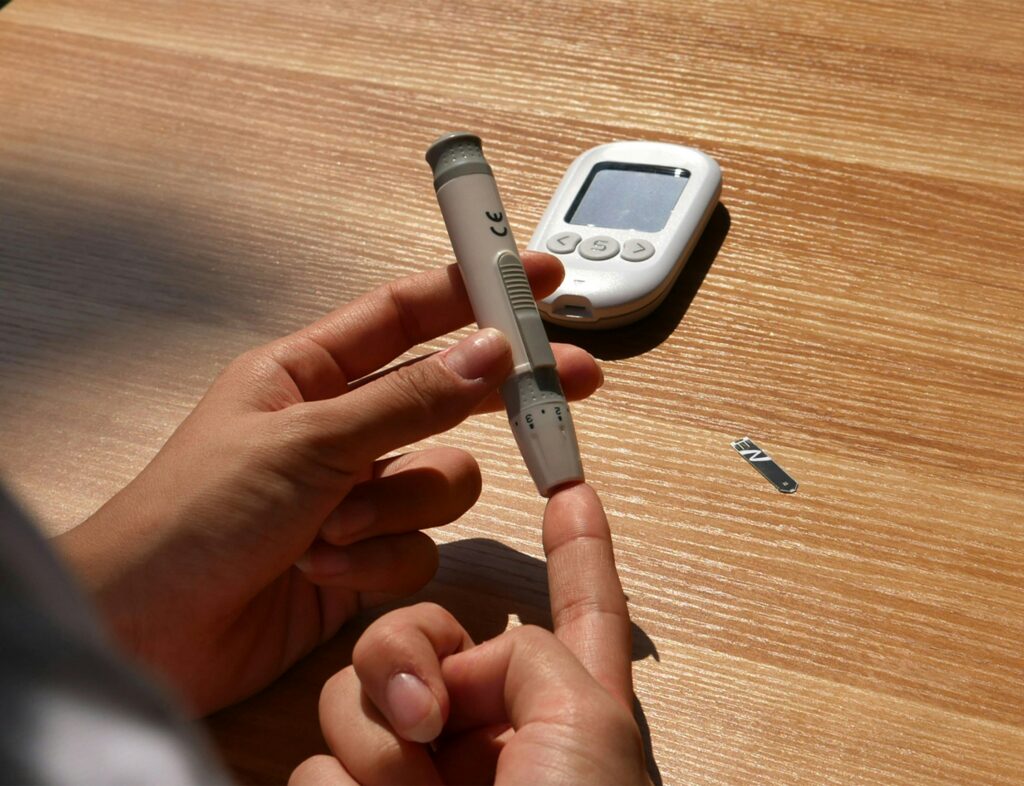
A1C is a blood test that reflects your average blood glucose over the past 2-3 months, expressed as a percentage. Lowering A1C matters because most of the levers — diet, exercise, weight, sleep — produce measurable improvements within 8-12 weeks, and every percentage-point reduction is associated with lower diabetes-complication risk — including a 21% reduction in any diabetes-related endpoint and a 37% reduction in microvascular complications per 1% A1C decrease in the UKPDS observational analysis (Stratton IM et al., BMJ 2000, PMID 10938048).
This guide walks through what A1C actually measures, how fast it can change, and the evidence-backed levers that move the number — plus when lifestyle changes need to be paired with medication.
What A1C measures (and what counts as “high”)
A1C — sometimes called HbA1c, hemoglobin A1C, or glycated hemoglobin — measures the percentage of hemoglobin in your red blood cells that has glucose chemically attached to it. Because red blood cells live for about 120 days, the test reflects your average blood glucose over the past 2-3 months, not your glucose level on the day of the test.
The standard American Diabetes Association categories are:
- Normal: below 5.7%
- Pre-diabetes: 5.7% to 6.4%
- Diabetes: 6.5% or higher
The relationship between A1C and average glucose follows a linear equation derived from the A1c-Derived Average Glucose (ADAG) study. Estimated average glucose (eAG) translates your A1C percentage into the average glucose level you would have seen on a continuous glucose monitor over the past 2-3 months. The formula is eAG (mg/dL) = 28.7 × A1C – 46.7 (Nathan DM et al., Diabetes Care 2008, PMID 18540046). For practical conversions — an A1C of 6.0% corresponds to an average glucose of about 126 mg/dL, 7.0% to about 154 mg/dL, and 8.0% to about 183 mg/dL.
How fast A1C can actually change
Because A1C reflects a rolling 2-3 month average, meaningful changes take time. A new dietary or exercise intervention typically shows partial effect at 4-6 weeks and fuller effect at 10-12 weeks, depending on baseline.
Realistic expectations from the clinical literature:
- Lifestyle intervention in pre-diabetes (Diabetes Prevention Program, DPP): a 58% reduction in progression to type 2 diabetes over 2.8 years compared with placebo, while metformin reduced incidence by 31% (Knowler WC et al., N Engl J Med 2002, PMID 11832527)
- Structured exercise alone in type 2 diabetes: approximately a 0.66 percentage-point reduction in A1C compared to control across meta-analyzed trials (Boulé NG et al., JAMA 2001, PMID 11559268)
- Combined diet, exercise, and weight loss: can produce larger A1C reductions than any single intervention alone, particularly in the first 12-24 weeks; the magnitude depends on baseline A1C, medication status, and how consistently the changes are sustained
These numbers refer to clinical-trial averages. Individual response varies based on starting A1C, baseline insulin sensitivity, and how consistently the intervention is sustained.
Diet changes that lower A1C
The single highest-leverage dietary change for most people is reducing refined carbohydrates (white rice, white bread, sugar-sweetened beverages, pastries) and replacing them with high-fiber whole foods (legumes, whole grains, vegetables, intact fruits).
Higher-fiber dietary patterns — Mediterranean, DASH (Dietary Approaches to Stop Hypertension), plant-forward — are consistently associated with lower diabetes risk and improved cardiometabolic outcomes. In a 2019 Lancet systematic review, people in the highest quintile of dietary fiber intake had a 15-30% lower incidence of type 2 diabetes compared to those in the lowest quintile, and high-fiber clinical trials showed reductions in body weight, systolic blood pressure, and total cholesterol (Reynolds AN et al., Lancet 2019, PMID 30638909).
Practical levers:
- Aim for 25-30 g of fiber daily. Most adults fall well short of this target. Beans, lentils, oats, berries, whole grains, and vegetables are the densest fiber sources.
- Sequence your meal: fiber and protein first, refined carbs last. Eating fiber and protein before refined carbohydrates blunts the post-meal glucose peak.
- Replace sugar-sweetened beverages with water or unsweetened tea. This single change typically produces the largest individual A1C effect for high-soda drinkers.
- Vinegar before high-carb meals may modestly lower post-meal glucose. Acetic acid slows gastric emptying; effects have been observed in small trials but vary substantially across studies.
- Watch processed-food sugar substitutes. Invert sugar and sucrose behave similarly on blood glucose, and high-fructose corn syrup (HFCS) is in the same family. Reduce all of them.
The overall pattern matters more than any single food. Total daily load of refined carbohydrates plus sugar drives the trend in A1C, not occasional treats.
Exercise and movement that lower A1C
Exercise lowers A1C through two main mechanisms. It acutely lowers blood glucose during and immediately after the session, and it improves insulin sensitivity for 24-72 hours afterward.
The meta-analytic evidence shows aerobic exercise alone reduces A1C by roughly 0.66 percentage points compared to control, with similar reductions from resistance training and slightly larger effects from combined aerobic + resistance programs (Boulé NG et al., JAMA 2001, PMID 11559268).
Practical levers:
- 150 minutes of moderate aerobic activity per week. Brisk walking, cycling, swimming, or anything that gets your heart rate to roughly 60-70% of max. This is the ADA-recommended minimum.
- Two to three resistance-training sessions per week. Bodyweight or weights, working all major muscle groups. Resistance training increases muscle glucose uptake independent of insulin.
- Short post-meal walks: 10-15 minutes after each main meal. Three short walks after meals were more effective at lowering 3-hour post-dinner glucose than a single 45-minute walk in older adults at risk for glucose intolerance (DiPietro L et al., Diabetes Care 2013, PMID 23761134).
- Break up sedentary time. Standing or short walking breaks during otherwise sedentary periods reduce post-meal glucose excursions in observational and small-trial data.
The most actionable single tactic for someone newly working on A1C is a 10-15 minute walk after the biggest meal of the day.
Weight loss and A1C
Weight loss is one of the most reliable ways to lower A1C in people with overweight or obesity. The Diabetes Prevention Program (DPP) lifestyle arm produced an average 5.6 kg weight loss alongside the 58% reduction in diabetes progression (Knowler WC et al., N Engl J Med 2002, PMID 11832527).
The pattern from the clinical literature:
- 5% body-weight loss typically produces meaningful improvements in fasting glucose and insulin sensitivity
- 5-10% body-weight loss produces larger A1C reductions and can move pre-diabetes back toward the normal range
- 10%+ body-weight loss is associated with diabetes remission in a subset of people with type 2 diabetes diagnosed within the past few years (Lean ME et al., Lancet 2018, PMID 29221645)
The weight-loss approach matters less than the sustained calorie deficit. Mediterranean, low-carbohydrate, plant-forward, and intermittent-fasting approaches all produce A1C reductions when they create consistent caloric deficits. Pick the approach you can sustain for 12-24 weeks.
Sleep, stress, and the hidden levers
Two underweighted factors significantly affect A1C — sleep quality and chronic stress.
Short sleep duration impairs glucose metabolism and increases insulin resistance in controlled laboratory studies, with effects observable within days of sustained restriction. Long-term short sleep is associated with higher A1C and elevated diabetes risk in observational studies. The practical levers are unglamorous but cumulative — earlier bedtime, dark and cool room, no late-evening eating, consistent wake time.
Chronic stress elevates cortisol, which directly raises blood glucose and antagonizes insulin. Stress-management practices (regular sleep, exercise, meditation, social connection) lower cortisol over time and indirectly support A1C reduction. Heavy alcohol intake is also worth flagging — it disrupts sleep, adds calories, and impairs glucose regulation.
What CGM data adds to A1C tracking
A1C tells you your average glucose over months. A continuous glucose monitor (CGM) tells you the shape of your glucose curve — which foods spike you, how long the spike lasts, how often you stay in a healthy range overnight, and whether your post-meal walks are working.
The two metrics complement each other rather than replace each other:
- A1C is the long-run summary statistic, best for tracking trajectory over 2-3 months
- CGM time-in-range is the day-to-day variability metric, best for tactical food choices and identifying spike triggers
If you’re working on lowering A1C, a CGM during the early weeks of a change can dramatically accelerate the learning. You see which meals spike you and which don’t, and you can adjust portion size, food sequencing, or meal timing in real time rather than waiting 3 months for the next A1C draw.
For context on how specific sweeteners affect glucose, see Ultrahuman’s sucrose explainer, the Coke Zero glucose-response analysis, and the invert sugar explainer.
When to escalate — medication and clinician consult
Lifestyle changes are powerful for people with pre-diabetes (A1C 5.7-6.4%) and many people with newly diagnosed type 2 diabetes (A1C 6.5-7.5%). But there are situations where pharmacological treatment is the right tool, and lifestyle changes often work better alongside medication rather than instead of it.
Talk to your clinician if any of the following apply:
- Your A1C is significantly above target despite lifestyle effort, or above 7.5%. ADA Standards of Care recommend individualized therapy decisions; medication is typically considered early at higher A1Cs to reduce complication risk, and lifestyle changes work alongside (not instead of) medication for most people with type 2 diabetes.
- Symptoms of high glucose — frequent urination, intense thirst, blurred vision, unintentional weight loss, fatigue
- A1C is rising despite consistent lifestyle effort — may indicate progressing insulin resistance or beta-cell decline that needs medication
- You’re already on diabetes medication and considering changes. Coordinate before increasing exercise intensity or cutting carbs aggressively, since hypoglycemia is a real risk on insulin or sulfonylureas.
- You have other cardiovascular or kidney risk factors — these affect medication choice
Metformin, GLP-1 agonists, SGLT-2 inhibitors, and other glucose-lowering drugs work through different mechanisms. The right choice depends on your A1C, weight, kidney function, cardiovascular risk, and personal preferences. A primary care doctor or endocrinologist is the right person to walk through these trade-offs.
This article is for informational purposes and is not medical advice. People with diabetes, pre-diabetes, or insulin resistance should discuss specific lifestyle and medication choices with a clinician. Disclosure: Ultrahuman sells the M1 CGM, which tracks blood glucose response to food in real time, and the Ring AIR and Ring PRO, which track sleep, HRV, and movement metrics relevant to glucose regulation.