


For most people without a diagnosed autoimmune, IBD, or food-sensitivity condition, nightshade vegetables aren’t inflammatory and don’t meaningfully spike blood glucose. The widely-cited claim that they trigger inflammation in joints or worsen autoimmune conditions has weak clinical evidence behind it for the general population. The exception in the nightshade family is potato — but that’s because of starch content, not because of being a nightshade. Tomato is even modestly anti-inflammatory in trial data, driven by lycopene.
Nightshades (botanically the Solanaceae family) include tomato, potato, eggplant, bell pepper, chili pepper, paprika, and tomatillo. These foods carry small amounts of alkaloids — most notably solanine in potatoes — which feed the “nightshades are inflammatory” claim. At typical food-level intake the alkaloid exposure is well below the threshold that causes any clinical effect in healthy adults.
This guide walks through what counts as a nightshade, what the inflammation evidence actually shows, when solanine matters, what Ultrahuman’s CGM data reveals about glucose response on three of the most common nightshades, the narrow groups who may genuinely benefit from limiting them, and the practical bottom line.
What counts as a nightshade vegetable
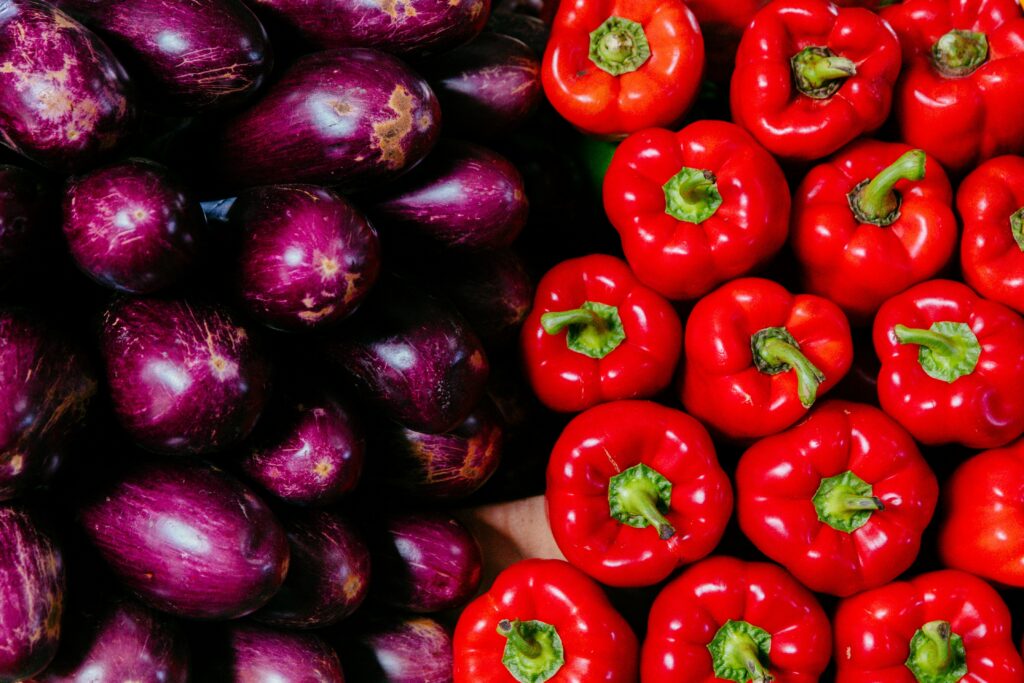
Nightshades are vegetables and fruits in the Solanaceae (Solanaceae) plant family. The common food members are:
- Tomato (and tomato-based products: paste, sauce, ketchup)
- Potato (white, red, yellow, fingerling, but not sweet potato — sweet potato is a different plant family, Convolvulaceae)
- Eggplant (aubergine)
- Bell pepper (sweet pepper, capsicum)
- Chili pepper (jalapeño, cayenne, habanero, paprika)
- Tomatillo
- Ground cherry (Cape gooseberry, Physalis)
- Ashwagandha (root used as a supplement; less commonly eaten)
The nightshade family also includes inedible or toxic plants like deadly nightshade (belladonna), mandrake, and tobacco — which is where the family’s reputation comes from. The edible nightshade vegetables we eat are domesticated, food-safe varieties with alkaloid levels far below the toxic species.
Common confusions — sweet potato, black pepper, peppercorns, and turmeric are not nightshades. Sweet potato is a morning-glory family vegetable; black pepper is a Piperaceae (different family entirely).
Are nightshades actually inflammatory?
The popular claim that nightshades trigger or worsen inflammation — particularly arthritis, autoimmune conditions, or IBS — doesn’t hold up well to clinical scrutiny. There’s no high-quality randomized trial or systematic review that establishes a nightshade-inflammation causal link in the general population.
The evidence runs in the opposite direction for tomato specifically. A GRADE-assessed systematic review and meta-analysis of 38 randomized controlled trials on lycopene and tomato consumption found significant improvements in cardiovascular risk markers including inflammatory markers, blood pressure, and lipids (Zamani et al., Curr Pharm Des 2023, PMID 37496241). A separate meta-analysis of 21 trials on tomato/lycopene supplementation found reductions in skin inflammation markers and improvements in skin density (Zhang et al., Crit Rev Food Sci Nutr 2024, PMID 36606553). Tomato isn’t pro-inflammatory; it’s modestly anti-inflammatory in trial settings.
The arthritis-specific claim is mostly anecdotal. Patient-facing arthritis organizations generally note that some people report nightshade-aggravated joint pain, but no published clinical evidence supports broad nightshade avoidance for arthritis management. If you suspect a personal reaction, a structured elimination + reintroduction trial under clinical supervision is a reasonable approach — not a default lifestyle.
Solanine and glycoalkaloids — when they actually matter
The biological basis for the “nightshade inflammation” concern centers on glycoalkaloids — plant-defense compounds that include solanine (potato), tomatine (tomato), and similar compounds in eggplant and peppers. At very high doses, glycoalkaloids are genuinely toxic — causing gastrointestinal symptoms, neurological effects, and in extreme cases poisoning.
The doses that matter clinically are far above what normal food intake provides. The main dietary sources of glycoalkaloid exposure are potato products — specifically heated potato, sweet potato, and tuber products (Zhou et al., Genes Nutr 2019, PMID 30984301). Practical points:
- Green or sprouted potatoes carry elevated solanine. Trim away green skin and discard sprouted spots before cooking.
- Cooking affects glycoalkaloid content, though the effect varies by method. Boiling can leach some glycoalkaloids into the cooking water; baking and frying have smaller effects since they don’t involve water loss. Glycoalkaloids are relatively heat-stable, so trimming green skin and sprouts before cooking does more to reduce exposure than the choice of cooking method.
- Toxic exposure requires consuming far more glycoalkaloid than any normal food serving provides. Regular potato consumption sits well below any documented threshold for a clinical effect.
- No high-quality evidence links typical alkaloid exposure from tomato, eggplant, or peppers to inflammation or autoimmune flare in healthy adults.
The practical takeaway — normal nightshade consumption sits multiple orders of magnitude below any documented alkaloid threshold. Worry about how potatoes are prepared (avoid green or sprouted), not about whether you should eat them at all.
What CGM data shows on nightshade glucose response
In Ultrahuman’s Open Glucose Database (OGdB) — a continuous-glucose-monitor cohort dataset built from M1 CGM users — the nightshade vegetables fall into two clear groups: the non-starchy nightshades (tomato, eggplant) show minimal glucose impact, while potato consistently spikes.
| Nightshade | Avg peak glucose | Stable response | UH Food Score | What it means |
|---|---|---|---|---|
| Tomato (1 piece) | 90 mg/dL | 100% | 9/10 | No meaningful spike; well within normal post-meal glucose |
| Eggplant (41 g serving) | 101 mg/dL | 100% | 8/10 | Very small spike; stable response in all users |
| Potato (1 small, raw) | 130 mg/dL | 59% | 5/10 | Medium spike; unstable response in 41% of users |
The pattern is the article’s punchline. Tomato and eggplant are metabolically benign — no glucose spike, no instability. Potato is the outlier with a 130 mg/dL average peak and unstable response in 41% of users — that’s because of its starch content (a small potato carries meaningful starch, in the range of 15-20 grams of carbohydrate), not because it’s a nightshade. The OGdB potato entry reflects raw potato as logged; cooked potato responses (boiled, baked, fried, or cooled-and-reheated to develop resistant starch) vary considerably by preparation, but the directional finding — that potato spikes more than non-starchy nightshades because of starch — generalises across cooking methods.
Bell pepper is not in OGdB but, as a physiological inference based on its very low carbohydrate density (~6 g per medium pepper), would be expected to behave similarly to tomato and eggplant.
The practical implication is portion control on potato, not nightshade avoidance. Pairing potato with protein, fat, and fiber (rather than eating it alone) flattens the glucose response substantially. Sweet potato — not a nightshade, but often confused — has a slightly lower glycemic load than white potato but is still starchy.
Methodology note — OGdB metrics are aggregated from anonymised M1 CGM user food-log + glucose-pair data across the M1 user base. “Avg. peak value” is the average post-consumption glucose maximum reported by users who logged that specific food. “Stable response” means the peak rise stayed within OGdB’s stability threshold for that user. “Food Score” (out of 10) is Ultrahuman’s composite of two components: the magnitude of the post-consumption glucose peak relative to baseline, and the percentage of users showing a stable (non-spiking) response. Sample sizes per food are not surfaced on individual OGdB product pages, and the 100% stable response figures reflect the users who logged that specific food, not population-wide claims. Individual responses vary substantially by person, meal context, preparation method, and circadian timing.
Who actually should consider limiting nightshades
Most people have no reason to limit nightshades. The narrow groups who may genuinely benefit are:
- People with a confirmed personal sensitivity. If you’ve noticed consistent symptoms (joint pain, GI upset, skin reactions) after specific nightshades and a structured elimination + reintroduction trial under clinical supervision confirms it, individual avoidance is reasonable.
- People with autoimmune conditions doing an Autoimmune Protocol (AIP) elimination phase. Some AIP protocols exclude nightshades during the initial elimination period, but evidence specifically supporting this is limited. Reintroduction in a structured way is part of the protocol.
- People with diagnosed histamine intolerance. Tomato, eggplant, and ripening peppers can be high in histamine or histamine-releasing. Histamine intolerance is a condition where the body accumulates histamine beyond its elimination capacity and produces sporadic, non-specific symptoms across multiple systems including flushing, headaches, and GI upset (Jochum, Nutrients 2024, PMID 38674909). It’s rare and warrants allergist evaluation.
- Someone with diagnosed nightshade allergy. Genuine IgE-mediated allergy to specific nightshade vegetables exists but is uncommon, and should be diagnosed by an allergist.
- People with active inflammatory bowel disease (IBD) flares. Some find raw nightshades aggravate symptoms during flares; this varies considerably by individual.
If none of these apply — and they don’t for the vast majority — the routine “avoid nightshades” advice from popular wellness sources doesn’t have evidence behind it. The cost (losing tomato, pepper, and eggplant from the diet) usually exceeds any plausible benefit.
For broader context on dietary patterns and how nutrition shapes inflammation, see Ultrahuman’s how to balance hormones naturally guide.
Practical bottom line
For most people, nightshades are fine and most are actively healthful. Eat tomato, eggplant, bell pepper, and chili pepper without restriction. With potato, the consideration is starch, not the nightshade label — portion-control it the way you’d portion-control any starchy carb (rice, bread, pasta).
Where to be more thoughtful:
- Potato preparation. Discard green skin and sprouts. Cool and reheat (cooked-and-cooled potato develops resistant starch, which lowers the glucose spike).
- Pair potato with protein, fat, and fiber. This flattens the glucose response in CGM data substantially.
- If you have a real sensitivity or autoimmune condition flaring with suspected nightshade triggers, an elimination + reintroduction trial under clinical supervision is reasonable — not a default lifestyle.
- If you’re using a CGM, watch your individual response. Some people spike on tomato sauce (added sugar in commercial sauces) more than on a plain tomato. Your data is the most reliable answer for you.
For the general population, the “nightshades are inflammatory” claim is one of the most common pieces of nutrition folklore that the evidence doesn’t support — eat them with confidence. People with diagnosed autoimmune conditions, IBD, suspected histamine intolerance, or a confirmed personal nightshade sensitivity should use a structured elimination + reintroduction protocol with their clinician rather than defaulting to either restriction or full inclusion.
This article is for informational purposes and is not medical advice. If you have a diagnosed autoimmune condition, IBD, suspected food allergy, or persistent symptoms, discuss specific dietary changes with a clinician before starting an elimination protocol. Disclosure: Ultrahuman sells the M1 continuous glucose monitor (CGM), and the Open Glucose Database (OGdB) referenced in this article is built from anonymised M1 user data. Individual glycemic responses vary substantially by person, meal context, and circadian timing.