



Progesterone is the dominant hormone of the second half of your cycle (the luteal phase, after ovulation), and it shapes how you sleep, feel, and recover. When it’s low — common in perimenopause, anovulatory cycles, and high-stress states — the typical post-ovulation calm doesn’t quite arrive: sleep gets choppier, mood gets edgier, and the body-temperature rise that normally marks the luteal phase fades. Understanding the pattern matters because the underlying cause is often addressable (anovulation, perimenopause, stress, or low energy availability), and the symptoms can point to what’s going on with your cycle.
This guide walks through what low progesterone actually feels like, the signals a wearable (like the Ultrahuman Ring) can pick up, the common underlying causes, and when to consider testing or treatment.
What progesterone does in your cycle
Progesterone surges after ovulation. The corpus luteum (the structure left behind by the ovary after the egg is released) produces it for about 10–14 days in a healthy luteal phase. If pregnancy doesn’t happen, the corpus luteum dissolves, progesterone falls, and a period follows.
During its time in the system, progesterone:
- Core body temperature rises 0.3–0.7°C across the luteal phase (Baker FC et al., Temperature (Austin) 2020, PMID: 33123618). This is the classic post-ovulation temperature rise that fertility-tracking methods use to confirm ovulation; progesterone is thought to drive the thermogenic effect.
- Calms the nervous system through its metabolite allopregnanolone, which acts on GABA receptors — the brain’s main calming (inhibitory) system, the same one that sedatives and anti-anxiety medications target. The result for most women is a sedative, sleep-promoting effect during the luteal phase. In PMDD (premenstrual dysphoric disorder) and a subset of women, the same allopregnanolone fluctuations can paradoxically worsen mood. At low concentrations, GABA-A receptor modulators can produce negative mood effects, even though higher concentrations are calming (Bäckström T, Bixo M, Strömberg J, Curr Psychiatry Rep 2015, PMID: 26396092). The system is more complex than “progesterone good, low progesterone bad.”
- Affects sleep architecture. Luteal-phase sleep shows increased sleep spindle activity and reduced REM, both potentially progesterone-related (Baker FC, Lee KA, Sleep Med Clin 2018, PMID: 30098748).
- Stabilizes the endometrial lining, preventing breakthrough bleeding and supporting an implantable surface if pregnancy occurs.
When progesterone is low or absent (an anovulatory cycle, where ovulation doesn’t happen at all), none of these effects fully arrive. Body temperature stays flat across the cycle, sleep loses its luteal-phase pattern, and the calming GABA signal doesn’t kick in. That cycle ends with what feels like a different kind of premenstrual week than usual: less predictable, often more agitating.
The classic low-progesterone symptoms
Low or absent progesterone tends to show up as a cluster of symptoms in the second half of your cycle. Not every symptom appears in every woman, but the pattern is recognizable:
- Trouble falling or staying asleep, especially in the week before your period. Without the normal luteal-phase progesterone surge, the sleep-architecture changes that usually come with that phase don’t fully arrive.
- Mood symptoms in the late luteal phase — anxiety, irritability, low-grade depression, mood swings. PMS that feels worse than usual, or PMDD-pattern symptoms in some women.
- Spotting before your period. Low progesterone can fail to maintain the endometrial lining, causing brown or pink spotting in the days before a real bleed starts.
- Shorter cycles (less than 25 days between periods) or a short luteal phase (under 10 days between ovulation and period). Both reflect insufficient progesterone.
- Heavier or longer periods when progesterone has been low for several cycles — the endometrium builds up under unopposed estrogen and sheds more dramatically.
- Breast tenderness lasting into the late luteal phase. Progesterone normally counterbalances estrogen’s effect on breast tissue; without it, tenderness can linger.
- Hot flashes or feeling overheated in the second half of the cycle, particularly in perimenopause when progesterone is declining.
These symptoms are common signals but not specific to low progesterone alone. Thyroid issues, chronic stress, and other hormonal patterns can produce overlapping symptom pictures. The clue is the cycle timing: low-progesterone symptoms cluster in the second half of the cycle and resolve when the period starts.
How low progesterone shows up in wearable data
A wearable like the Ultrahuman Ring can pick up several of the luteal-phase signals that depend on progesterone being present. When those signals are missing or attenuated, it suggests the luteal phase is shorter or weaker than usual.
Skin temperature. The 0.3–0.7°C luteal-phase rise is the most reliable wearable signal of ovulation and progesterone activity. A cycle without a clear post-ovulation temperature increase often points to an anovulatory cycle (no progesterone surge at all) or a weak luteal phase.
Resting heart rate (RHR). RHR tends to rise modestly in the luteal phase as progesterone-driven thermogenesis and metabolic changes kick in. A flat RHR across the cycle can be a soft signal that the luteal phase isn’t producing its usual hormonal effect.
Heart rate variability (HRV). HRV often shows a drop in the luteal phase relative to the follicular phase, reflecting the autonomic shift that comes with the post-ovulation hormonal milieu. A missing luteal-phase HRV drop can suggest the same as a missing temperature rise: ovulation may not have happened, or the luteal phase was weak.
Sleep metrics. The blunted-REM, more-spindle-activity sleep pattern of the normal luteal phase becomes less pronounced when ovulation doesn’t happen or the luteal phase is weak. Some women also see lower sleep efficiency in the late luteal week without an obvious behavioral cause. That can be a soft signal that the luteal phase isn’t doing its usual work.
Ultrahuman’s Cycle Aware Recovery view surfaces these cycle-phase patterns directly. The wearable doesn’t measure progesterone itself, but the downstream pattern of body temperature, RHR, HRV, and sleep tells you whether the post-ovulation phase is doing its hormonal work.
Common underlying causes
Low progesterone is usually a symptom of something further upstream, not a standalone condition. The common causes:
Perimenopause. Progesterone typically declines before estrogen does. Prior’s review of perimenopause endocrinology describes “shorter luteal phase lengths and lower progesterone levels” as characteristic of the transition (Prior JC, Novartis Found Symp 2002, PMID: 11855687). Many women feel the progesterone drop years before noticing the classic estrogen-fall symptoms. See Ultrahuman’s piece on perimenopause symptoms for the broader picture.
Anovulatory cycles. When ovulation doesn’t happen, no corpus luteum forms, so no progesterone is produced. This is common in perimenopause, polycystic ovary syndrome (PCOS, now also called Polyendocrine Metabolic Ovarian Syndrome or PMOS), and stress-affected cycles. The cycle proceeds with estrogen but without the post-ovulation balancing effect.
Hypothalamic amenorrhea / low energy availability. Under-eating or over-exercising suppresses the brain’s signal to the ovaries. Ovulation slows or stops, and progesterone drops along with it.
Chronic stress. Sustained stress and high cortisol can suppress the hypothalamic-pituitary-gonadal (HPG) axis, the brain-to-ovary signaling chain, leading to weaker luteal phases or skipped ovulations even in regularly menstruating women.
Age. In the late 30s and into the 40s, the proportion of anovulatory cycles increases naturally, often before menopause symptoms become obvious.
When testing helps (and when it doesn’t)
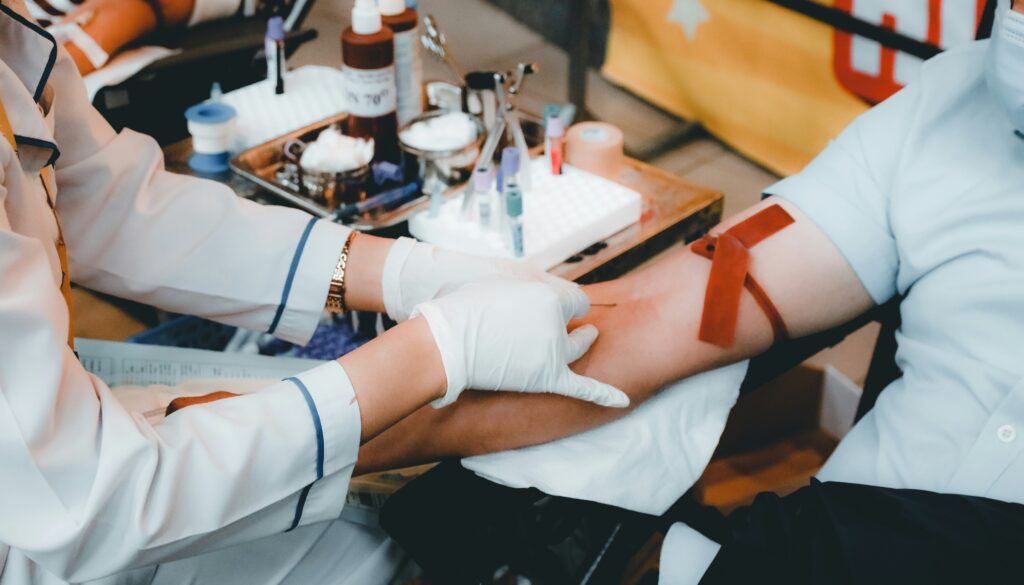
Direct progesterone testing has a specific use case: confirming whether ovulation actually happened in a given cycle. A serum progesterone drawn 7 days before the expected period (mid-luteal-phase) should be >3 ng/mL if ovulation occurred. Lower than that suggests an anovulatory or weak-luteal cycle.
Testing is useful when:
- You’re trying to conceive and want to confirm ovulation is happening (mid-luteal progesterone draw, ideally in 2–3 different cycles to account for variability).
- Cycles have become very short or are spotting frequently, and you want to confirm a luteal-phase defect.
- You’re in late 30s/early 40s with new mood, sleep, or cycle changes and want to understand whether perimenopause is starting.
Testing is less useful when:
- You’re not specifically tracking ovulation or fertility. The cycle-phase pattern alone (from symptoms or wearable data) usually tells you what you need to know.
- A single random progesterone level taken without knowing cycle phase is rarely interpretable.
- You’re on hormonal contraception. Synthetic progestins suppress your natural cycle, so endogenous progesterone testing isn’t meaningful.
For a broader look at when hormone testing actually helps in perimenopause, see Ultrahuman’s guide to perimenopause testing.
What to do about low progesterone
The right intervention depends on the underlying cause.
If anovulatory cycles or hypothalamic amenorrhea is the driver, the fix is upstream: address the cause (reduce training volume + increase intake for HA; treat thyroid or insulin issues for PCOS-pattern; manage chronic stress). Ovulation usually returns when the underlying stressor is corrected, and progesterone returns with it.
If perimenopause is the driver, lifestyle alone won’t restore the cycle. Cyclic or continuous progesterone (often called “bioidentical progesterone” or “micronized progesterone”) is one option clinicians use for luteal-phase symptom relief. Some prescribe it independently, others as part of broader hormone replacement therapy (HRT). The evidence and indication vary by symptom profile and individual risk, so this is a clinician conversation rather than a self-directed step.
Lifestyle levers that help across causes:
- Sleep consistency. Going to bed and waking at consistent times stabilizes the HPA axis and supports more reliable ovulation.
- Reduce chronic stress. Sustained cortisol elevation suppresses the cycle. Breathwork, structured downtime, and reducing nighttime stimulants help.
- Adequate energy intake. Especially for women training hard. Chronic energy deficit is one of the most common reversible causes of weak luteal phases.
- Limit alcohol in the luteal phase. Alcohol disrupts sleep architecture and HRV, both already compromised when progesterone is low.
This article is for informational purposes and is not medical advice. Hormone testing and treatment decisions should be made with a clinician familiar with your symptom picture, cycle history, and risk factors. Disclosure: Ultrahuman sells the Ring AIR, which tracks the skin-temperature, resting-heart-rate, and HRV signals referenced throughout this guide.
Frequently asked questions
What does low progesterone feel like?
Most commonly: sleep problems, mood symptoms (anxiety, irritability, mood swings), and cycle changes (spotting before the period, short cycles, heavier bleeding) in the second half of the cycle. The pattern timing matters: these symptoms cluster in the luteal phase and resolve when the period starts.
Can low progesterone cause anxiety?
Indirectly. Progesterone’s metabolite allopregnanolone normally has a calming effect via GABA receptors. When the luteal phase is weak or absent, that calming signal doesn’t kick in, and mood symptoms become more noticeable in some women. PMDD research shows the relationship is more complex: in some people, the fluctuation itself drives the mood symptoms more than the absolute level.
Is low progesterone the same as perimenopause?
No, but they overlap. Progesterone decline tends to be the first hormonal shift in perimenopause, often years before estrogen drops noticeably. Low progesterone can also happen in women who aren’t perimenopausal: anovulatory cycles, hypothalamic amenorrhea, and stress-induced cycles all produce a similar hormonal picture.
How can I tell if I’m having anovulatory cycles?
The most reliable home signal is the absence of a luteal-phase temperature rise. A typical ovulatory cycle shows a sustained 0.3–0.7°C rise in basal body temperature (or skin temperature on a wearable) after ovulation. A flat temperature pattern across the cycle, with bleeding still happening on schedule, suggests an anovulatory cycle.
Can my Ring detect low progesterone?
Not directly. The Ring doesn’t measure hormones. But it does track the downstream patterns: luteal-phase skin temperature rise, RHR increase, HRV drop, and sleep changes. When those signals are missing or weak in a cycle, that’s a useful indirect indicator that the post-ovulation phase isn’t doing its full hormonal work.
What’s a normal progesterone level mid-luteal?
By clinical convention, a mid-luteal progesterone level (drawn 7 days before the expected period) above 3 ng/mL is generally taken to confirm ovulation occurred. Levels above 10 ng/mL are often described as a robust luteal phase. Single values vary substantially, so averaging across 2–3 cycles is more informative than one draw, and a clinician’s interpretation in context matters more than any specific cutoff.
Can lifestyle changes raise progesterone?
Indirectly. Lifestyle changes that restore reliable ovulation (closing an energy availability gap, reducing chronic stress, improving sleep consistency) bring progesterone back as a byproduct. But there’s no specific food, supplement, or behavior that directly raises progesterone. The lever is ovulation, not the hormone itself.