

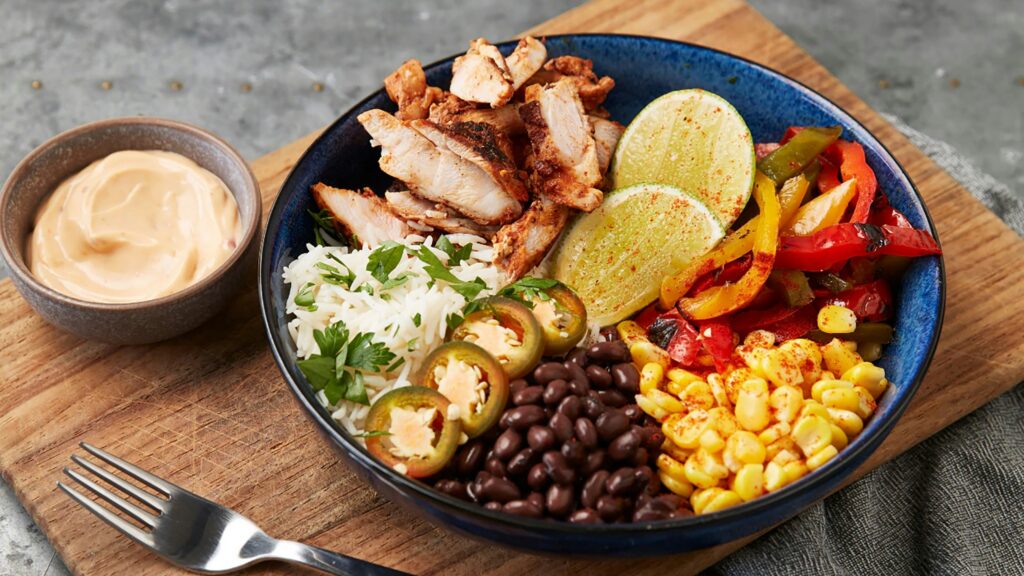
Chipotle is healthier than most fast food when you build the bowl carefully, but it can still drive a meaningful glucose spike if you stack white rice, chips, and a sweet vinaigrette.
According to data from the Ultrahuman Open Glucose Database (OGDb) from Ultrahuman M1 CGM users, a typical Chipotle meal produced an average glucose peak of 132 mg/dL. That is a small spike, with about 75% of users staying in a stable post-meal range, which is better than most fast food.
But how healthy your Chipotle bowl is depends on the rice base, the protein, the toppings, and the chips on the side. Two people ordering the same bowl can land in very different glucose territory depending on how they layer those choices.
This guide breaks down each menu category against real CGM data, then shows how to assemble the lowest-spike bowl on the Chipotle menu.
Is Chipotle actually healthy?
Yes, in the context of fast food. The ingredients are minimally processed, the portions are protein-heavy, and the bowl format makes it easy to skip the highest-glycemic items. The bowl also helps in a way most people overlook: a flour tortilla adds 50 grams of refined carbs on top of whatever rice you already chose.
But “healthier than other fast food” is not the same as “low-glycemic.” A standard Chipotle bowl can easily reach 80 to 100 grams of carbohydrate once you stack white rice, beans, corn salsa, and chips. That is enough to drive a meaningful glucose excursion even in metabolically healthy adults.
Researchers like Dr. Peter Attia and Dr. Casey Means argue that postprandial glucose excursions matter as much as fasting glucose for long-term metabolic health. The American Diabetes Association’s nutrition consensus reaches a similar conclusion: meal composition drives metabolic outcomes more than total calorie count (Evert et al., Diabetes Care 2019, PMID: 31000505).
The OGDb data shows that variability matters more than the menu. Two users ordering the same bowl can see very different spikes depending on the order in which they eat each ingredient, the fiber content of the meal, and whether they pair it with a short walk.
How to build the healthiest Chipotle bowl
- Base: Romaine salad, or half-portion of brown rice.
- Protein: Chicken or steak. Double portion if you skip the rice.
- Beans: Black beans, full portion.
- Fajita veggies: Full portion.
- Salsa: Tomato (mild) or tomatillo-green. Skip corn salsa.
- Topping: Guacamole and cheese.
- Skip: Chips, chipotle-honey vinaigrette, sour cream.
When it comes to blunting glucose spikes, the key with any meal is to front-load fiber and protein before any carbohydrate. A 2015 study in Diabetes Care found this single change reduces postprandial glucose by 28 to 37% (Shukla et al., PMID: 26106234).
Even if you overdo the carbs, a post-meal walk is the most reliable intervention (Reynolds et al., Diabetologia, 2016, PMID: 27747394).
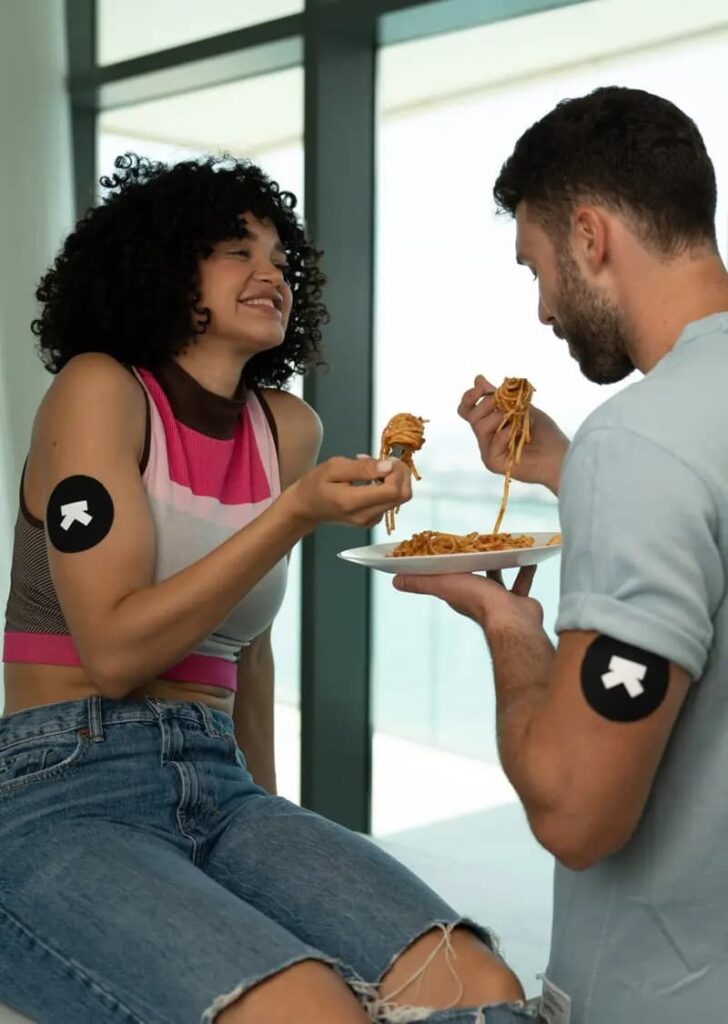
A CGM like the Ultrahuman M1 turns these principles into personal feedback: the bowl-vs-burrito and chips-vs-no-chips comparisons surface clearly in two or three meals.
What Ultrahuman CGM data shows about Chipotle
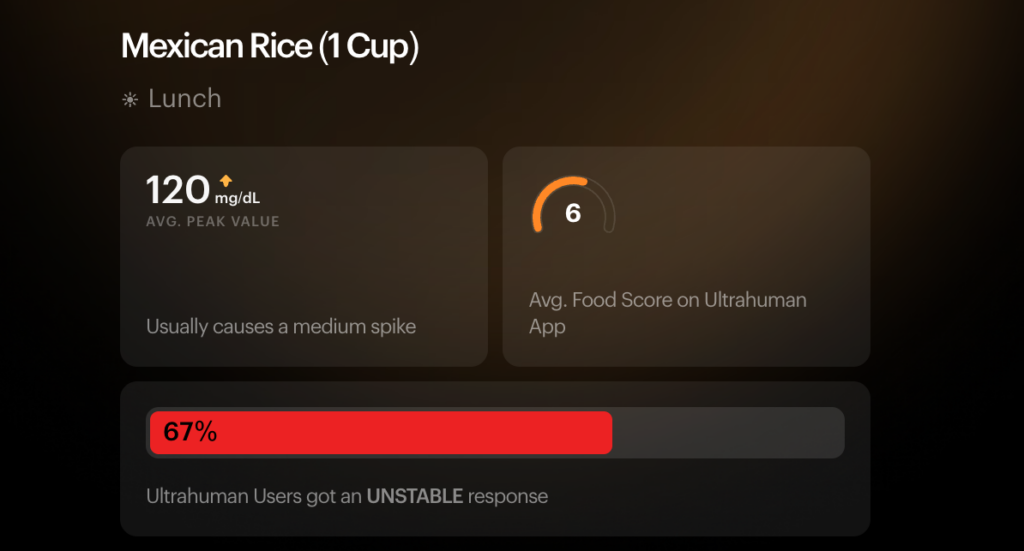
The Ultrahuman Open Glucose Database aggregates anonymized post-meal responses from M1 CGM users. Here is what the Chipotle-relevant entries show:
| Item | Avg. peak (mg/dL) | Response classification |
|---|---|---|
| Chipotle meal (aggregate) | 132 | Small spike · 75% of users stable |
Mexican rice (1 cup) | 120 | Medium spike · 67% unstable |
| Burrito with chicken, beans, cheese | 120 | Medium spike · 56% unstable |
| Tortilla chips (baked, 100 g) | 121 | Large spike · 50% stable |
Notes on OGDb data: For informational purposes only. A note on individual variation, methodology, and conflict. CGM glucose responses vary substantially across individuals based on insulin sensitivity, recent physical activity, sleep, stress, and other factors. The Ultrahuman OGDb is observational data from anonymized M1 users — not a controlled clinical trial. The numbers cited above represent population averages; your own response to the same meal can fall above or below the cited peak. People with diabetes should follow guidance from their care team rather than make medication, food, or activity changes based on this article. Disclosure: Ultrahuman sells the M1 CGM referenced throughout this guide.
Best Chipotle bases for glucose control
The base is the largest carb decision on the menu. Chipotle offers four options.
| Base | Carbs / serving | Glucose impact | Best for |
|---|---|---|---|
| White rice (cilantro-lime) | 40 g | Medium-to-large spike. Mexican rice in OGDb: 120 mg/dL avg peak, 67% unstable. | High-activity days · post-workout |
| Brown rice | 40 g | Similar carb load with more fiber and slower absorption. | Most users, most days |
| Romaine salad | 1-2 g | Smallest carb load on the menu. | Lowest-spike build |
| Half-portion rice | 20 g | Cuts the carb load in half. Easy ask. | Default upgrade |
Asking for a half portion of rice is the highest-leverage move on the menu. It removes 20 grams of refined carbohydrate in one sentence, and Chipotle staff are accustomed to the request.
Picking the protein
Eating protein with a meal dampens post-meal glucose excursions by slowing digestion. Every Chipotle protein option delivers at least 8 grams per serving, and most deliver over 20g.
The exception worth flagging is sofritas, the tofu-based option, which carries 5 grams of sugar per serving from its marinade. That is more sugar than every other protein combined.
| Protein | Calories | Protein | Sugar | Notes |
|---|---|---|---|---|
| Chicken | 180 | 32 g | 0 g | Lean, lowest-sugar protein |
| Steak | 150 | 21 g | 0 g | Lean, no added sugar |
| Barbacoa | 170 | 24 g | 1 g | Mildly marinated |
| Carnitas | 210 | 23 g | 0 g | Higher in fat, no sugar |
| Sofritas | 150 | 8 g | 5 g | Highest sugar of any protein |
| Fajita veggies (no protein) | 20 | 1 g | 4 g | Low calorie, no satiety |
For glucose control, chicken or steak give the best protein-to-sugar ratio. For vegans or vegetarians, Sofritas is a good plant-based pick, but pair it with extra black beans to keep total protein up. The chicken-and-beans pairing is a useful lower-spike default for most users.
Choose low-sugar toppings
Toppings are where the biggest glucose surprises live. Most people expect salsas to be neutral. Two are not.
Chipotle-honey vinaigrette carries 12 grams of sugar per serving. That is more than any other item on the menu. It is marketed as a salad dressing but is essentially a sweet liquid sugar dose.
Corn salsa delivers 16 grams of carbohydrate per serving. The natural sugar from corn is fine in isolation, but it stacks on top of rice and beans.
The healthiest Chipotle toppings are:
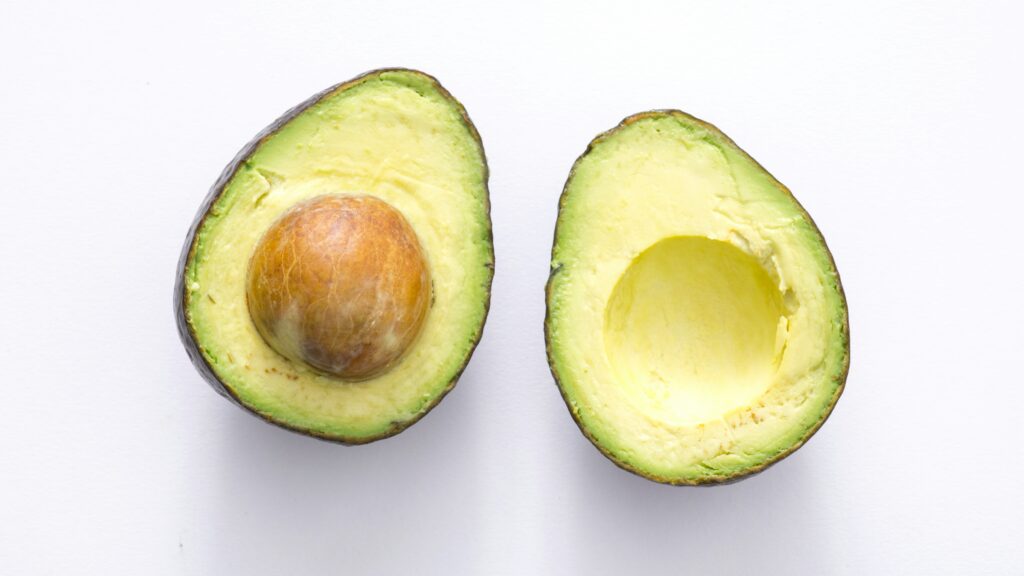
- Guacamole: Its 22 grams of fat slows gastric emptying – it’s the single best topping for blunting a glucose spike. (Cunningham & Read, Br J Nutr 1989, PMID: 2650735).
- Black or pinto beans: 7 to 8 grams of fiber per serving. Soluble fiber slows carbohydrate absorption and supports the gut microbiome. (Jenkins et al., Am J Clin Nutr, PMID: 6259925)
- Fajita veggies: 4 grams of carbohydrate, with non-starchy vegetable fiber. A free spike-blunter.
Cheese and sour cream are roughly neutral. They are fat-heavy and sugar-free, but offer no fiber benefit.
Chips, tortillas, and the side decisions
The single highest-impact change on the menu is choosing a bowl over a burrito. The flour tortilla adds 50 grams of refined carbohydrate on top of whatever is inside. A burrito with white rice and chips can deliver 130+ grams of carbohydrate in a single meal.
A 100-gram serving of baked tortilla chips spiked Ultrahuman users to 121 mg/dL on average. That is classified as a large spike, with only half of users showing a stable response. A full Chipotle chip bag is roughly 30% larger than the serving, and Chipotle’s chips are fried rather than baked.
The same glucose-blunting tactics apply to any starchy food. See Ultrahuman’s guide to managing glucose response on starchy snacks for the broader playbook.
Behavioral swaps that work:
- Bowl, not burrito.
- Half a portion of rice, not full.
- Share chips, or skip them.
- Tortilla on the side for one or two bites, not a full wrap.
Conclusion
Chipotle is one of the more glucose-friendly fast-casual options when you build it carefully. The principles are simple: skip the burrito wrap, halve the rice, lean into protein, fiber, and fat, and take a 10 to 15-minute walk after eating.
The OGDb numbers show that the gap between a 132 mg/dL average response and a personal best comes down to layering, not luck. A CGM closes that gap in two to three meals.