

Your parasympathetic nervous system runs the recovery side of your body. It slows your heart rate, restores digestion, lowers blood pressure, and rebuilds the energy you spent during the day. The sympathetic nervous system is the counterweight. It speeds your heart, dilates your pupils, and prepares you to handle stress, exercise, or anything that needs quick action. Both branches run automatically, both are always partially active, and the balance between them is what most wearables call “recovery.” Reading the balance, and learning how to shift it on demand, turns a vague “I feel stressed” into something measurable.
This guide walks through how the two branches interact, the signs that sympathetic activity has become chronic, and the evidence-backed approaches that can shift the balance toward rest and digest.
What’s the difference between the parasympathetic and sympathetic nervous systems?
Both branches make up your autonomic nervous system, the part that runs without conscious effort. Together they control heart rate, breathing depth, digestion, pupil dilation, and most of the body’s background regulation. They do opposite jobs through opposite chemical signals.
| Function | Sympathetic (“fight or flight”) | Parasympathetic (“rest and digest”) |
|---|---|---|
| Heart rate | Speeds up | Slows down |
| Breathing | Faster, shallower | Slower, deeper |
| Pupils | Dilate | Constrict |
| Digestion | Slows or shuts down | Stimulates |
| Blood flow | Diverts to muscles | Returns to organs and skin |
| Sweat | Increases | Decreases |
| Adrenaline | Released | Suppressed |
The parasympathetic branch transmits most of its signal through the vagus nerve, the longest cranial nerve in the body. It runs from the brainstem through the neck and chest into the abdomen, touching the heart, lungs, stomach, and intestines along the way. The majority of parasympathetic traffic travels along the vagus nerve, which is why so much of activating your parasympathetic system comes down to stimulating vagal pathways.
Stephen Porges’s polyvagal theory popularized the social-engagement framing of the vagus nerve in psychology and trauma literature; the autonomic neuroscience described here uses the standard two-branch sympathetic-parasympathetic model, on which polyvagal theory builds.
How your body switches between them
The two branches don’t take turns. They run simultaneously, with the dominance shifting based on what your body is doing. When you stand up suddenly, sympathetic activity briefly spikes to keep blood pressure stable. When you lie down to sleep, parasympathetic activity rises and heart rate drops. When you eat, parasympathetic signaling pulls toward your gut.
The mechanism behind this is the baroreflex, a constant blood-pressure feedback loop that adjusts heart rate moment-to-moment. The flexibility of this loop is one of several inputs to heart rate variability (HRV), which also reflects respiratory rhythms and other autonomic signals. A high HRV means your nervous system shifts between sympathetic and parasympathetic dominance fluidly. A low HRV means one branch (usually sympathetic) is dominating in a way that doesn’t release. This is why HRV has become the standard wearable proxy for cardiac vagal (parasympathetic) tone, with research showing HRV indexes parasympathetic contributions to cardiac regulation (Laborde, Mosley & Thayer, Front Psychol 2017, PMID 28265249).
Signs your sympathetic system is overactive
Short-term sympathetic activation is functional and necessary. The problem is when sympathetic dominance becomes chronic, when the body stays in ready-for-action mode even at rest, in bed, or on weekends.
The signs most people recognize:
- Tired but wired. Exhausted but unable to fall asleep, racing thoughts at bedtime.
- Elevated resting heart rate. A sustained rise of several bpm above your normal baseline lasting more than a few days.
- Persistently low HRV. A drop below your usual range across multiple nights.
- Disrupted digestion. Bloating, irregular bowel movements, or appetite changes. Sustained sympathetic dominance slows the digestive process.
- Poor sleep onset or fragmented sleep. Taking longer to fall asleep, waking through the night, or feeling unrefreshed despite enough hours in bed.
The clinical name for the cumulative cost of this is allostatic load, the wear-and-tear that comes from a stress response system that doesn’t fully reset between activations. It is the bridge between chronic sympathetic dominance and the cardiovascular, metabolic, and mental-health conditions linked to long-term stress.
How to activate the parasympathetic nervous system
The parasympathetic branch responds to direct, intentional inputs within seconds to minutes. A few minutes of focused breathing or cold exposure can shift HRV measurably in a single session. Five evidence-backed levers:
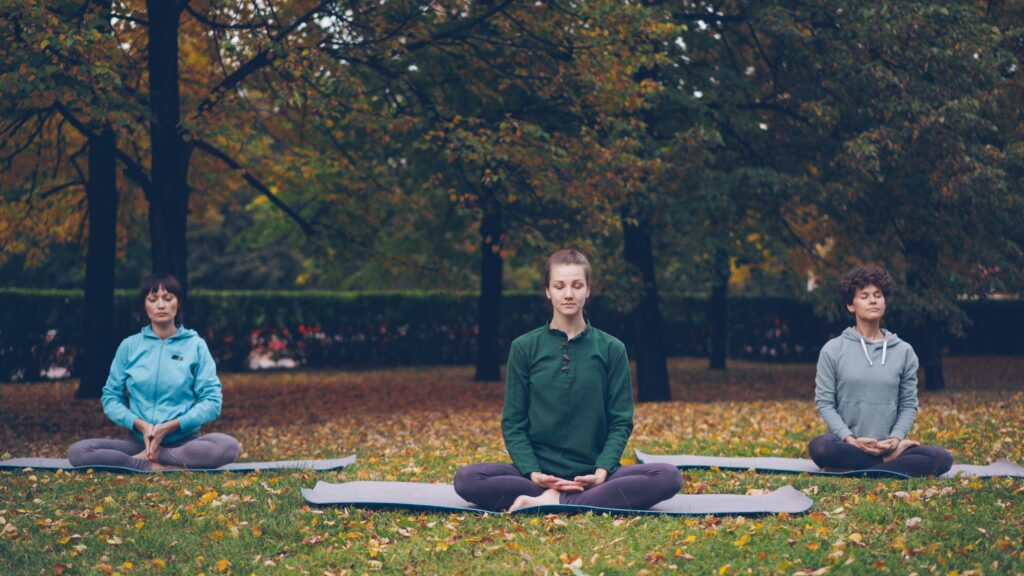
1. Slow nasal breathing with long exhales. The single most studied parasympathetic activator. Breathing at about 6 breaths per minute (roughly 4-5 seconds in, 5-6 seconds out) has documented effects on HRV and sympathovagal balance (Russo, Santarelli & O’Rourke, Breathe 2017, PMID 29209423). The vagus nerve responds specifically to the expiratory phase of breath. Box breathing (4-4-4-4) and 4-7-8 breathing both work via this mechanism.
2. Face-cold exposure. Submerging your face in cold water, or applying a cold pack to the forehead and cheekbones, triggers the mammalian dive reflex, a direct vagal pathway. Heart rate drops within seconds. Useful during acute anxiety.
3. Humming, singing, chanting, or gargling. Slow, structured singing and humming produce measurable HRV change through the long-exhale physiology that makes paced breathing work, with respiratory synchronization driving the cardiac response (Vickhoff et al., Front Psychol 2013, PMID 23847555). The vagus nerve also passes by the larynx, so vocal-cord vibration may contribute, though this mechanism is less established.
4. A 10-15 minute walk after a meal. Light post-meal movement engages the gut-brain axis and supports digestion without spiking sympathetic activity. It also lowers post-meal glucose excursions, which itself reduces sympathetic load.
5. Sleep prioritization and consistency. Deep, non-REM sleep is peak parasympathetic dominance. Going to bed at consistent times moves your underlying autonomic balance, not just your acute state. Several weeks of regular sleep timing can lift baseline HRV, though individual response varies. Underlying stress load (workload, relationships, scheduling) needs structural fixes, not just acute breathing tools.
For a structured list of HRV-raising tactics, see Ultrahuman’s 11 ways to improve HRV.

How your Ring AIR or Ring PRO measures the balance
Wearables can’t measure sympathetic and parasympathetic activity directly. What they can measure are the downstream effects on heart rate, HRV, and breathing rate, which together read the balance well.
Overnight HRV is the most direct parasympathetic proxy available in a consumer wearable. Sleep is the window when sympathetic noise drops out and the autonomic signal is cleanest. A higher overnight HRV reflects stronger parasympathetic dominance during sleep.
Resting heart rate trends track the longer-term balance. A persistent upward drift in RHR usually reflects elevated baseline sympathetic activity from training stress, chronic stress, illness coming on, or alcohol patterns.
Sleeping heart rate behaves similarly. In Ultrahuman’s 532,000-Ring-user cohort, the median sleeping heart rate runs 64-67 bpm across age decades, with most users dropping into the 60s during deep sleep, the parasympathetic-dominant phase of the night. See Ultrahuman’s sleeping heart rate by age for the full breakdown.
The Ring AIR cohort: how far heart rate drops at night by age. Across 329,460 Ring AIR users (age 20-90), the median user’s heart rate drops about 15 bpm from daytime to the deepest point of night-time sleep — the magnitude of peak parasympathetic activation.
| Age band | Median day RHR (bpm) | Median night RHR (bpm) | Median drop | Typical drop range (25th-75th %ile) |
|---|---|---|---|---|
| 20-29 | 73 | 57 | 16 | 14-18 |
| 30-39 | 73 | 57 | 16 | 14-18 |
| 40-49 | 73 | 57 | 15 | 13-18 |
| 50-59 | 72 | 57 | 14 | 12-17 |
| 60-69 | 71 | 57 | 14 | 12-16 |
| 70+ | 69 | 56 | 13 | 11-16 |
The day-to-night drop narrows steadily with age, from 16 bpm in the 20s to 13 bpm in the 70+ band. Median daytime resting HR drifts down slightly with age (73 → 69 bpm), while the nighttime trough stays remarkably stable (56-57 bpm); the narrowing drop reflects a smaller day-night swing in older adults rather than a higher overnight floor. This is the parasympathetic-activation story — the depth of nightly vagal activation declines gradually with age.
Methodology. Day-time and night-time resting heart rate values come from anonymized Ring AIR user records (n=329,460 users, ages 20-90). Day-time RHR is each user’s rolling mean of daily resting heart rate during awake periods (calmest detected window); night-time RHR is the rolling mean of the lowest HR during sleep. Per-age-band sample sizes range from 3,564 (70+) to 129,340 (20-29), aggregated across both sexes. Observational wearable data, not a clinical study. Ring AIR users are a self-selected population of health-aware adults, so median values may sit slightly above general-population norms. Medication use, cardiovascular disease, and other clinical exclusions were not applied.
For the underlying HRV distribution by age, see Ultrahuman’s HRV chart by age.
When to talk to a clinician
Persistent low HRV with fainting, dizziness, rapid heart rate on standing, or chronic unexplained gut symptoms warrants a clinician conversation about postural orthostatic tachycardia syndrome (POTS) or dysautonomia. A wearable can flag the pattern; it can’t diagnose the cause.
This article was written and clinically reviewed by Dr. Mukul Mittal, MD, Medical Director at Ultrahuman. It is for informational purposes and is not medical advice. Persistent autonomic imbalance, low HRV alongside symptoms, or sudden changes in heart-rate patterns should be discussed with a clinician familiar with your individual health profile. Disclosure: Ultrahuman sells the Ring AIR and Ring PRO, which track HRV, sleeping heart rate, breathing rate, and recovery patterns referenced throughout this guide.